Can High-Volume Backlinking Remain Viable for 2026?
48% 5-9 days. It falls brief in imitating AI bots and does not have the crawl steering sophistication required in 2026.
Offers a low-cost service for bulk link submissions, but quality is low. Can trigger considerable losses in high-volume campaigns where every indexed link matters. When a popular option, LinkPusher was among the services most affected by the 2025 spam updates. 35% 8-12 days. Still counts on outdated RSS feed and ping-based approaches.
RapidIndex markets itself with "indexing within 24 hours" guarantees, but the test results could not support that claim. 32% 7-11 days. Particularly inadequate on Tier 2 and listed below links, where it showed practically no effect.
Ping technology is now practically completely disregarded by Google. The interface is contemporary and reporting is detailed, however when it comes to the actual task of indexing, it falls seriously short.
Exploring Future in Link Indexing for 2026
One of the lowest performers throughout the test period, CrawlBoost produced outcomes that are merely not worth the financial investment. 19% 11-14 days. Out of 500 sent links, only 95 were indexed.
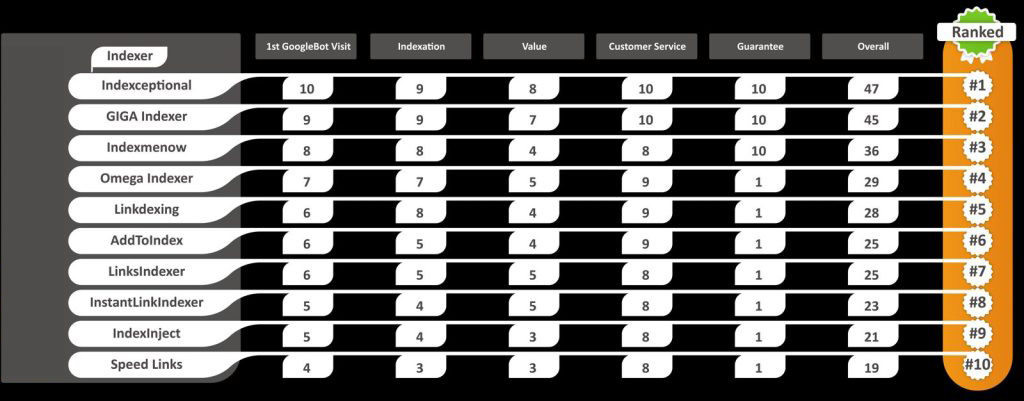
Even the paid plan drags other services. Searching for "complimentary backlink indexing" eventually causes wasted time and a burned link-building budget. Rank Service Indexing Rate (14 Days) Speed Recommendation -------------------------------------------------------------- 1 91.4% 60% within two days 2 OmegaIndexer 68% 7-10 days 3 SpeedLinks 48% 5-9 days 4 BulkIndex Pro 46% 6-10 days 5 LinkPusher 35% 8-12 days 6 RapidIndex 32% 7-11 days 7 PingMaster Pro 28% 9-13 days 8 IndexBot360 24% 10-14 days 9 CrawlBoost 19% 11-14 days 10 FreeIndex+ 15% 12-14+ days In 2026, backlink indexing has ended up being one of the most important actions in any SEO strategy.
Google's AI-powered crawl algorithms are filtering out these manipulative signals. If you're running premium SEO operations, reporting to business customers, and wish to maximize the value of every single link, sticks out as by far the most reputable and high-performing option. For lower-budget jobs, OmegaIndexer still offers a sensible option, however you'll require to be client with speed.
Exploring Evolution in Link Indexing for 2026
A backlink indexer is a service that speeds up the discovery and indexing of your backlinks by Google. If a backlink isn't indexed, it brings no SEO value because Google isn't conscious of its existence. Indexer services speed up this process by directing Google bots towards the target URL through numerous crawl steering methods.
Furthermore, diminishing crawl budget plans suggest Google no longer visits every URL as regularly as before. This makes modern indexer services that utilize natural crawl steering technologies important for any serious SEO project. In our test, totally free and freemium services revealed the lowest performance with just a 15% indexing rate. Many complimentary services depend on outdated technology and can't keep up with Google's current algorithms.
GSA SER video tutorial seriesThis differs substantially depending upon the service you utilize. In our test, the leading entertainer indexed 60% of links within the first 48 hours, while low-performing services stayed listed below 20% even after the full 14-day duration. As a market requirement, an indexing rate above 70% within 2 week is thought about effective.
These links are typically expensive, and if they don't get indexed, the entire financial investment goes to waste. An indexer can likewise be used for lower-quality Tier 3 links, however top priority should constantly be provided to high-value links. Modern indexer services use crawl steering innovations that naturally bring in Google bots to the target URL.
Services that utilize old-generation spam ping techniques do carry the threat of activating Google's spam filters. That's why choosing a service that utilizes modern innovation is essential. When selecting an indexer service, take notice of these requirements: indexing rate within 14 days (should be above 70%), speed performance within the first 2 days, API integration and automation assistance, quality of the reporting user interface, compatibility with Google's existing algorithms, and ease of access of consumer assistance.